Cross-platform data flows revealing how device sensors influence reel spin outcomes in regulated digital gaming spaces
Written by Lars Schwarz · Sep 23, 2026
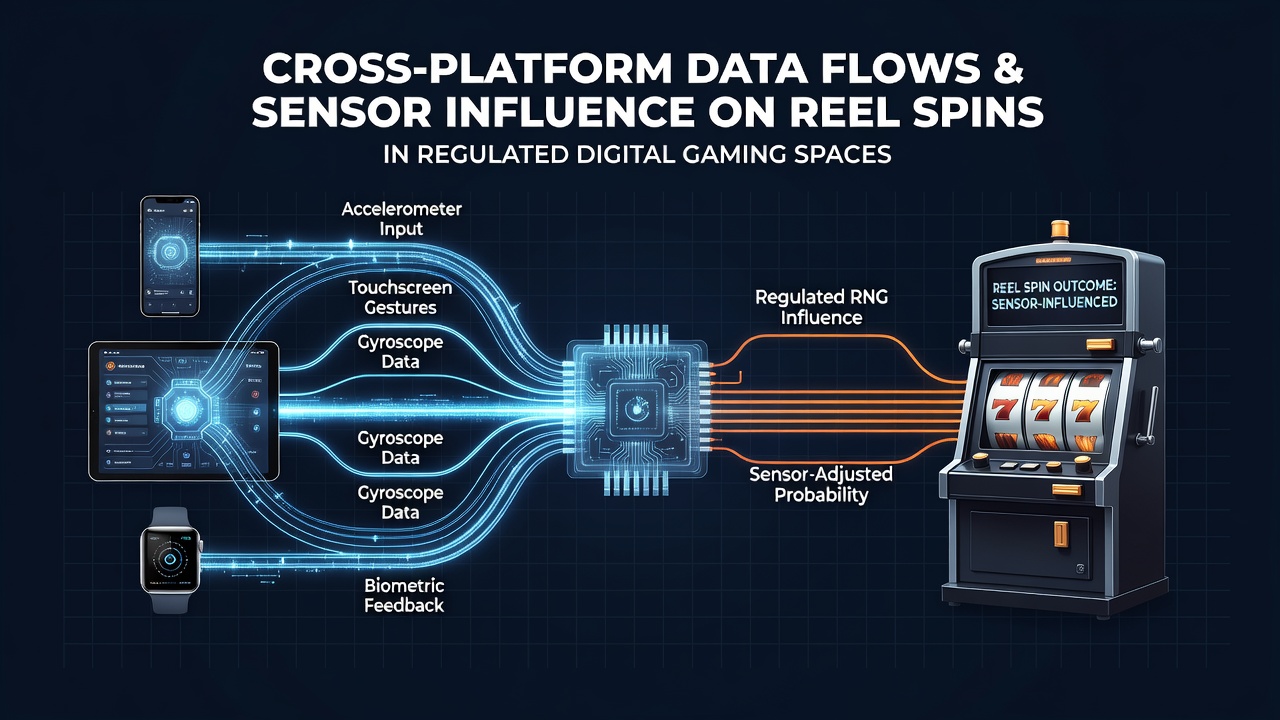
Cross-platform data flows revealing how device sensors influence reel spin outcomes in regulated digital gaming spaces
Device sensors embedded in smartphones and tablets transmit continuous streams of motion, orientation, and environmental data during digital reel sessions, creating layered flows that regulators monitor for compliance across multiple jurisdictions. These flows originate from accelerometers, gyroscopes, and magnetometers that register player interactions while certified random number generators determine symbol sequences on independent servers. Data packets travel through encrypted channels between client applications and central systems, carrying metadata that includes tilt angles, rotation velocities, and grip patterns without altering the underlying probability matrices that govern reel results.
Data Transmission Pathways in Mobile Gaming Ecosystems
Platform operators route sensor inputs through application programming interfaces that separate behavioral analytics from outcome generation modules, ensuring that accelerometer readings feed into player engagement dashboards rather than the core random processes. In September 2026, updates from the Nevada Gaming Control Board highlighted standardized protocols requiring all licensed operators to log sensor-derived metrics separately from RNG calls, allowing auditors to verify that no cross-contamination occurs between physical device signals and numerical outputs. Cross-platform synchronization occurs when users switch between mobile and desktop sessions, with session tokens preserving continuity while sensor data resets to baseline values on each new device initialization.
Research from academic institutions shows that gyroscope data typically captures micro-movements associated with handheld play, yet these measurements route exclusively toward responsible gaming flags such as prolonged session duration or erratic interaction rhythms. Regulated environments enforce air-gapped architectures where reel spin algorithms execute on hardware isolated from client-side sensor feeds, preventing any pathway for orientation data to seed or modify the pseudorandom sequences that produce final symbol alignments.
Regulatory Oversight of Sensor Integration
Authorities in multiple regions mandate third-party testing of data pipelines to confirm that device sensors serve auxiliary functions including anti-fraud detection and accessibility features. The Australian Communications and Media Authority published guidelines in mid-2026 requiring operators to document every instance where magnetometer readings contribute to geolocation verification without intersecting the reel determination logic. Observers note that such separations maintain integrity because outcome certification occurs under controlled laboratory conditions where external variables like device tilt remain excluded from test protocols.

European regulators, including those affiliated with the Malta Gaming Authority, require periodic audits that trace sensor data packets from collection points through aggregation servers and into reporting databases. These audits confirm that reel spin outcomes remain statistically independent from any sensor variable, with correlation coefficients consistently reported near zero across thousands of verified game titles. When anomalies appear in aggregated datasets, investigators isolate them to network latency or user interface rendering rather than direct influence on random generation.
Analytical Applications of Collected Sensor Metrics
Operators utilize aggregated sensor information to refine user interface elements such as auto-spin activation thresholds or screen orientation prompts, yet these adjustments occur downstream from the certified RNG engines. Studies conducted by university research teams demonstrate that while tilt detection can trigger bonus round animations or camera shifts, the underlying symbol probabilities stay fixed according to approved paytables. Cross-platform flows enable consistent application of these interface tweaks whether a player accesses a title via iOS, Android, or browser-based clients, because backend profiles store preference flags separately from outcome tables.
Figures released by industry monitoring groups reveal that sensor data contributes to heat-mapping of play sessions, highlighting peak interaction periods without modifying the mathematical foundation of reel cycles. Compliance documentation from Canadian provincial bodies further specifies that any machine learning models trained on motion data must undergo review to exclude variables that could theoretically affect random processes, reinforcing the boundary between analytics and core game mechanics.
Conclusion
Cross-platform data flows in regulated digital gaming spaces channel device sensor outputs toward engagement tracking, fraud prevention, and interface optimization while certified systems preserve the independence of reel spin outcomes. Regulatory frameworks established across jurisdictions ensure that motion and orientation metrics remain compartmentalized, with verification processes confirming statistical separation between sensor inputs and random number generation. Continued advancements in logging standards support transparent oversight as platforms expand across devices and regions.